
Key Takeaways
- Up to 40 percent of weight lost on Semaglutide can come from muscle if not managed
- Muscle loss slows metabolism, making weight regain more likely
- Protein intake and strength training are non-negotiable on GLP-1 medications
- Medical supervision dramatically improves body composition results
- The right plan preserves muscle while maximizing fat loss
Why Muscle Loss Happens on Semaglutide
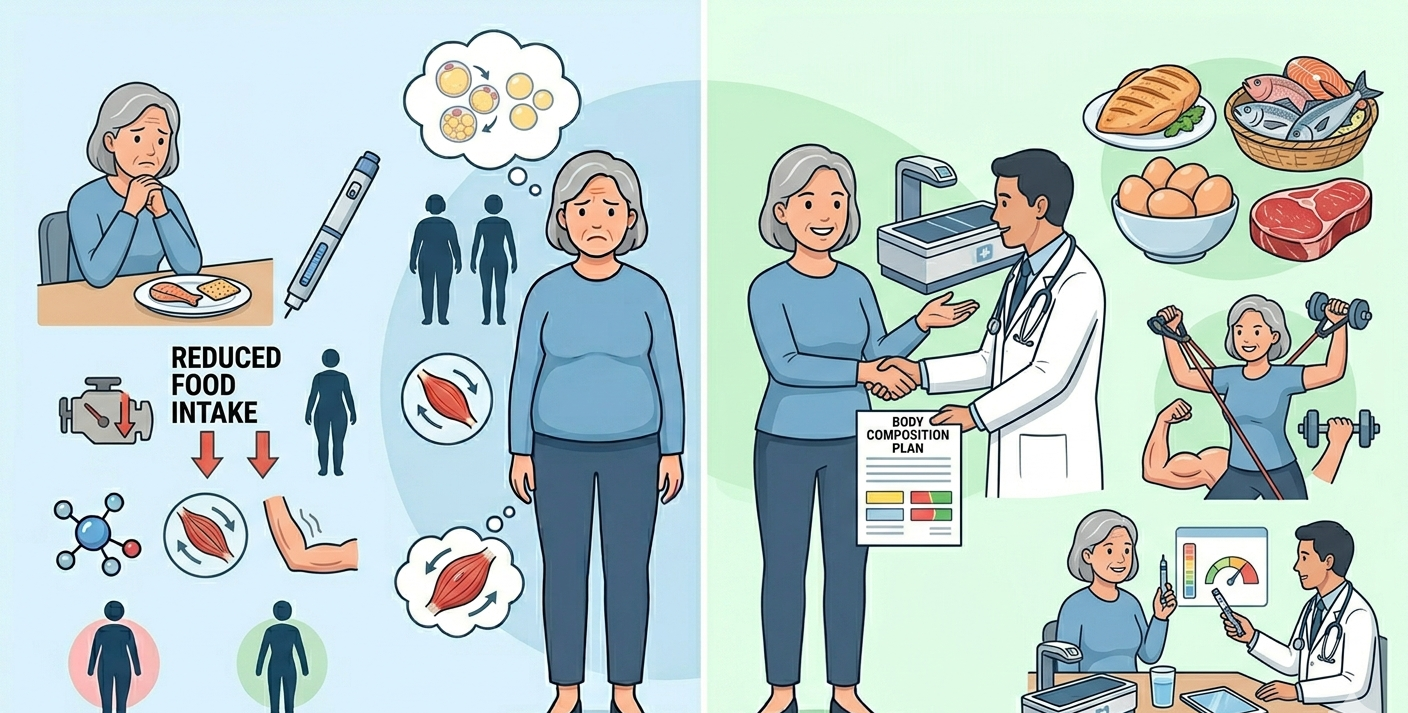
Semaglutide and other GLP-1 medications suppress appetite so effectively that many patients dramatically reduce their food intake, including critical protein. Combined with the caloric deficit, this triggers your body to break down muscle for energy alongside fat.
Studies show that without intervention, 25 to 40 percent of weight lost on GLP-1 medications can come from lean muscle mass. This is a significant problem because muscle is your body's primary calorie-burning tissue.
Why Losing Muscle Backfires
- Slower metabolism (you burn fewer calories at rest)
- Increased risk of weight regain after stopping the medication
- Reduced strength, energy, and physical function
- Worsened insulin sensitivity over time
- Looking "skinny fat" instead of toned
This is why our comprehensive medical weight loss program focuses on body composition, not just the number on the scale.
How to Preserve Muscle on Semaglutide
1. Hit Your Protein Target Every Day
Aim for 1.0 to 1.2 grams of protein per pound of goal body weight. For most patients, that's 100 to 150 grams of protein per day. Spread it across 3 to 4 meals.
Best protein sources:
- Chicken, turkey, lean beef, and fish
- Eggs and Greek yogurt
- Cottage cheese
- Whey or plant-based protein powder
- Tofu and tempeh
If your appetite is suppressed, prioritize protein first at every meal.
2. Strength Train 3 to 4 Times Per Week
Resistance training is the single most important habit to preserve muscle. Focus on compound movements:
- Squats, deadlifts, lunges
- Push-ups, presses, rows
- Planks and core work
20 to 40 minutes per session is enough. Cardio is great for heart health but does not preserve muscle the way strength training does.
3. Don't Cut Calories Too Aggressively
A moderate deficit of 300 to 500 calories below maintenance is ideal. Aggressive deficits accelerate muscle loss. Most patients on Semaglutide naturally fall into this range without restricting further.
4. Get Key Nutrients
Creatine (3 to 5 grams daily), vitamin D, magnesium, and omega-3s all support muscle preservation. IV therapy can rapidly correct deficiencies that compromise muscle health.
5. Consider Peptide Support
Peptide therapy including options like CJC-1295/Ipamorelin can support lean muscle mass while you're losing fat on GLP-1 medications.
What to Eat on Semaglutide
Sample Day for Muscle Preservation
Breakfast: 3 eggs + Greek yogurt (35g protein)
Lunch: Grilled chicken salad with quinoa (40g protein)
Snack: Protein shake with almond milk (25g protein)
Dinner: Salmon with roasted vegetables (35g protein)
Total: ~135g protein, balanced macros, nutrient dense.
Why Medical Supervision Matters
Self-prescribed or compounded GLP-1 medications without proper guidance often lead to muscle loss, nutritional deficiencies, and rebound weight gain. At Revive Atlanta MD, our physician-led weight loss program includes:
- Body composition tracking (not just weight)
- Nutritional guidance customized to your needs
- Functional lab testing to identify nutrient gaps
- Adjustments to dose and protocol as needed
This is the difference between losing weight and transforming your body.
Related Reading
- Why GLP-1 Can Cause Heartburn
- Hormones vs Thyroid: Causes of Weight Gain
- Cortisol, Belly Fat, and Stress Weight Gain
- Tirzepatide Weight Loss in Atlanta
- Semaglutide Weight Loss in Atlanta
Get Help in Atlanta
Lose fat, keep your muscle, and feel stronger than ever. Book your consultation today to start your medically supervised plan.